Custom Stickers, Die Cut Stickers, Bumper Stickers - Sticker Mule


Sharing information and reporting on all that reeks in American education, especially corporate reform in K12 education, the agenda to privatize the right to a free public education for every child, and general corruption in K12-higher education. Calling out and exposing rather than cowering.

AND eager for your help. Have a story of power, manipulation, self-interest or injustice which needs attention? Let me know and we'll let the world discover "what's that smell."

"If you're a profession of sheep, then you'll be run by wolves." -- David C. Berliner

"Journalism is printing what someone else does not want printed: Everything else is public relations." -- George Orwell

"Washing one's hands of the conflict between the powerful and the powerless means to side with the powerful, not to be neutral." -- Paulo Freire


PUBLIC SERVICE ANNOUNCEMENT! ;)

PUBLIC SERVICE ANNOUNCEMENT! ;)

Monday, November 23, 2015

NCTE 2015 Takes Stand Against Pearson; It's "Bloody"-well Time.

There are days when Paul Thomas is my hero. We have many similarities. We're both from working class, Southern backgrounds. We're both educators. We share an acute awareness of when our Southern accents are "showing." We share some thoughts on policy and education reform. We're both poor white boys what done good in edu-macating ourselves and others. We both doubt the existence of real academic and social meritocracies. We both study poverty. We have deep ties to the Carolinas. We both appreciate a good comic book.

N.o C.omment T.il E.ve of Change is already upon us? 
He's a tenured professor at Furman University, though. Currently, I'm a substitute teacher. He's an established member of the National Council of Teachers of English. I protested the organization's involvement in education reform efforts several years ago by no longer giving them my membership dollars.

In terms of how academia protects its own, Thomas has provisions in place that I do not have and never had when I was a professor, mainly tenure.

For better or worse, this means he can more confidently say controversial things without serious retribution than can early career scholars or those who want to climb the career ladder in English Education.

I know I've paid a price in dropping my membership, encouraging others to protest NCTE via doing the same, and even suggesting it is time for a new literacy organization that would be unencumbered by the dirty money and persuasion of well-funded reformer representatives. Less infiltrated, if you will.

Indeed, when I tried to express my passion, concern, and frustration with Common Core and associated constructs to students, peers, and the senior English Education professor at Washington State University, my most-recent college-level gig, I was labeled "an angry young man." I was angry and still have angry moments regarding what is happening in public education, and surely I wanted my pre-service teachers to be aware of the histories, problematics, and realities of teaching in Obama-era education environs. But the label was slapped onto me as if it was the only word to describe me.

Interestingly enough, when NCTE members tweeted an advertisement for members to join them on the convention floor this weekend to protest Pearson, one tweet suggested by doing so they could "share their anger." I faced the accusation of being angry as an isolation tactic.  NCTE-goers were having theirs appealed to and embraced in an inclusionary, persuasive tactic approach.

Thomas has some strong words about the protest that took place this weekend, and they are absolutely must-read. See them *here*.

Thomas seems to embrace the protest, but he still feels that NCTE has "blood on its hands."

Me too.

While I appreciate the work of NCTE's Conference of English Education Social Justice Committee to organize the protest, I recognize that Pearson's presence has been even more overwhelming on NCTE's convention floors in years past, that NCTE members have had knowledge of the Common Core State Standards since at least 2010, that NCTE accepted almost $300,000 from the Gates Foundation and that the National Writing Project affiliated with NCTE has accepted even more Gates money, and that no protests were organized from 2010-2014.

My questions regarding the protest are: Why now? Why not in previous years? Who stands most to gain from press about the event? Why was Pearson the only target? Why not protest the whole of Race to the Top/No Child Left Behind reforms, including the Common Core and Gates' control of education policy? Is there a connection between staging the protest this year and it being held during an election cycle (did you know that Chelsea Clinton spoke at this year's NCTE conference?) when President Obama is winding up his last term as president?

Thomas is still an NCTE insider. Despite sincere efforts to find alternative venues for my on voice and activism, I remain on the fringe. With as many shared members between NCTE and the BATS, with whom I've also had some issues, and BATS connections to United Opt Out, perhaps this is not surprising. That's fine, though. It's easy to be brave when everyone is telling you to be brave. When you need to be your bravest, however, is when no one is telling you to be brave. 
At least Doom respects transparency. 


There are those of us who are or were once involved in NCTE who heeded the call to share our feelings without the warm embrace of the organization, who called "BS" years before this weekend, and who may have paid a precious price for it.

Thomas ends his column with a reference to Frankenstein:
I fully accept Pearson et al. are the monsters, but literature shows us we must look at the Drs. Frankenstein for how the monsters came about.
Indubitably. To refer to trends in superhero comics, a genre within a medium that Thomas and I both study, not even the bad guys think of themselves as villains anymore.

Dr. Doom, Magneto, and..... NCTE? 


Sunday, November 15, 2015

What's Wrong With This Image?: NPE's Bill Gates Infographic

The Network for Public Education is circulating an infographic detailing the history of Bill Gates' efforts to influence American schooling. It spans fifteen years in timeline fashion and illustrates a growing presence and ambition. The timeline ends in 2015 with the claim that NAEP scores are flat under Gates-era reforms: "US NAEP scores decline -- Time To End The Experiment."
A truly important indicator of our students' intelligence, growth and potential?
N.O.P.E.

As infographics go, this one is a telling read. Links to articles act as evidence of the claims made in
most entries. However, there is one flaw. One can read the visual as suggesting that because NAEP scores are not improving, Gates' reform efforts need to end so that someone or something else can come along and get those scores up.

Those who are resisting current education reform efforts know not to put stock in the NAEP scores as any meaningful indicator. See Diane Ravitch's comments on the test in Reign of Error, for example. I believe what the graphic's creators meant to convey is that middling NAEP scores were part of the "problems" in American education that Gates wanted to "fix." His programs and influence have not accomplished a major goal that Gates focused on as a rhetorical means to gain as much control as he has. Since they failed to do what they said they would do, they shouldn't continue.

See the otherwise excellent graphic *here*  to see what I mean.

Wednesday, November 4, 2015

Critiquing the Meritocracy: Two Good Reads

I encourage you to read the following two short pieces and consider them in relation to poverty, schooling, and society. One is entitled "Don't Give My Kid an Award." Written by a conscientious mother, this text is an example of someone with privilege explicating that privilege while using her son's schooling experience as a vignetted informal case study. The other, "How the Myth of Meritocracy Ruins Students," reveals how even the most liberal and open-minded "check your privilegers"  benefit from embracing the meritocracy mindset, at the expense of more-vulnerable citizens.

Friday, October 16, 2015

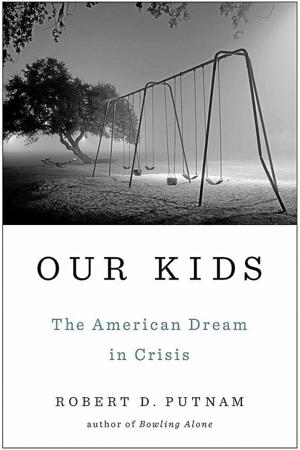
_Our Kids_ Reflections, Part 10: Chapter 6: "What is to Be Done?"

Part 10, Chapter 6: “What is to Be Done?” Poverty and Economic Inequity in Putnam’s _Our Kids: The American Dream in Crisis_.

After detailing aspects of economic inequity through the lenses of family, parenting, schools, and community in his book Our Kids: The American Dream in Crisis, Robert Putnam attempts a closing chapter that offers possible actions for addressing growing economic gaps and opportunity gaps in contemporary American society.

Progress in such equity may be difficult, given “growing class segregation” which may lead to less
Search "Putnam" to read my other
installments on this book, my connections to it,
and how it can help you grow a social justice agenda.
empathy than is needed (230) to understand what less privileged people experience. The bootstrap narrative that once seemed to serve so many so well also works against mobility equity and empathy, as many continue to believe, “If I and my classmates could climb the ladder…so could kids from modest backgrounds today” (230).

One practical solution that might hit American Capitalists in their dominating ethos is the notion of “opportunity costs,” a socioeconomic explanation of how the opportunity gap hurts all citizens, not just the poor, especially in terms of money spent or wasted (231).  Putnam argues that “investment in poor kids raises the rate of growth for everyone, at the same time leveling the playing field in favor of poor kids” (231). But is “everyone” a strong enough concept for Capitalists to embrace reform, especially in America’s hyper-competitive capitalism that favors notions of winning and losing? In such a system, does anyone who has more than someone else want to favor the field for someone who has less? Even though much research suggests raising up the bottom will elevate most everyone, I am not sure American society is willing to give up its fierce concept of competition and conspicuous consumerism.  Even if, as Putnam argues, “Writing off such a large fraction of our youth is an awfully expensive course of inaction,” it might be an expense many well-off Americans are willing to absorb to keep their status, their perceived edge (233).

After attending to opportunity costs, Putnam revisits his earlier chapters in order, providing specific suggestions that would require the redistribution of tax funds (231) he calls for in this chapter’s opening pages:

Family:

1.       Facilitate family planning such that the American norm becomes “childbearing by design” rather than “by default” across social strata (245).
2.       Expand tax credits like the Earned Income Tax Credit and the child tax credit.
3.       Protec/strengthen social programs like food stamps, housing vouchers and child care that provide “safety net” services.
4.       Reduce incarceration for nonviolent crimes.
5.       Enhance rehabilitation services (245-248).

Parenting:

1.       More parental leave
2.       Nix welfare policies requiring mothers to work in the first year of a baby’s life.
3.       Provide affordable, high-quality, center-based daycare for low-income families.
4.       Make sure daycare teachers are well-trained and well-paid.
5.       Create “wraparound” family services (248-251).

Schools:

1.       Shrink growing residential segregation by moving kids, money, and/or teachers to different schools.
2.       Revisit the negative impacts zoning regulations and home mortgage deductions have on residential segregation.
3.       Publicly subsidize mixed-income housing.
4.       Keep high-quality teachers in poor schools.
5.       Create school cultures in which such teachers can teach rather than babysit.
6.       Extend school hours to offer more extracurriculars and enrichment opportunities.
7.       Put social and health services in schools serving poor children.
8.       Support the notion of neighborhood schools.*
9.       Reinvest in vocational education at the secondary and post-secondary levels.
10.   Strengthen the abilities of community colleges to better serve poor communities (251-258).

Especially in late 2015, as presidential election season gears up, many may read this list and connect it to the tone of certain candidates’ agendas. 

Reconfiguring the tax code and redistribution of wealth sounds very much like what we hear from Bernie Sanders, but it also might recollect what we hear many in the media say will keep him out of the presidency. I hearken back to Hillary Clinton’s dismissive tone regarding Sanders’ big ideas and her reiteration of the phrase “I know how to get things done” in the recent Democratic debate. In that phrase and the disbelief I see surrounding Sanders’ social change agenda, I see those old notions of American Capitalism where it is just a “given” that big-money interests have to be placated for any sort of change, and only the modicum of social change can trickle down to those most in need because big profiteers need to keep profiting, and to do that, some have to win and some have to lose. I noticed Hillary Clinton using the rhetoric of the American Dream, the bootstrap narrative, too. To enact many of the social programs and reconfigurations of tax systems and other systems where private money is involved (see prisons, and, more and more frequently, public schools), we will have to acknowledge the myth of the American Dream and stop embracing as reality something that reifies the old systems of socioeconomic inequalities.

Furthermore, when we see politicians continue to invest in the mythos, we need to be especially critical of why they are doing so.

Regarding the “schools” suggestions, I was less fraught over Putnam’s suggestions than I expected. The community college suggestions seem to align with President Obama’s push to bolster the import of community colleges.   Putnam does mention charter schools as a possible solution when he talks about neighborhood schools (*), which can be worrisome if one thinks that is where the bulk of Putnam’s reform efforts reside. I however, found more promise in the notion of transforming public schools into bustling community centers.

An image of American cultural values
or one which challenges them?
 Imagine a school open 24 hours a day, with a wide range of health care services not housed only in hospitals, but in clinic spaces on grounds. Imagine, even, cafeterias open all day and constant access to showers and even sleeping spaces. Surely our existing budgets and cultural expectations of schooling do not provide for this sort of scenario, and I would never advocate for teachers’ work days to be extended such that they see themselves working at a boarding school, but I see great potential in making every public school more of a support ecology, a built-in societal safety net, than they currently exhibit. I do not pretend to have the details worked out – and a lack of practical strategies beyond basic suggestions certainly dominates this chapter --  but I believe the best transformative practices Putnam offers reside in the notion of transforming schools into vibrant, always-active community centers.
Community:

1.       Provide extracurricular opportunities free of economic hardships via pay-to-play policies.
2.       Fund high-quality mentoring programs, perhaps via the Ameri-Corps program.
3.       Move poor families to better neighborhoods (258-260).
4.       Restore working-class wages.

Putnam closes with a refrain of his key appeal: That if we want to improve the lives of poor children, we need to see them as belonging to all of us. All kids need to be seen as “our kids,” as Putnam suggests once seemed the case. He states that even those who still buy in to Emersonian notions of self-reliance and other seemingly quintessentially American notions like manifest destiny, rugged individualism, and the American Dream’s work rhetoric “should acknowledge our responsibility to these children. For America’s poor kids do belong to us and we to them” (261). Low on details but full of possibilities, this final chapter is more guidepost than atlas, but better to work with scant direction than have no awareness at all of current pathways deleterious to so many and already closing in on our most vulnerable children and families.


Sunday, October 4, 2015

On Presidential Endorsements, Neutral Stances, and "New-Trail" Stances

The NEA has joined the AFT in endorsing Hillary Clinton as the choice presidential candidate, *despite many members' objections.* Meanwhile, other professional organizations in teaching and teacher education continue to ride out their "neutral" stances on Common Core and associated education reform measures of the Clinton-Bush II-Obama era.

With so much evidence of cabal/cartel-style, dim-luminati "leadership" at play, what's a dog to do? Education Reform-Critical Boxer has this advice:


Me? I might advise doing a Google search for "quotes on starting new." Shelley comes to mind as well:
‘My name is Ozymandias, king of kings:
Look on my works, ye Mighty, and despair!'
Nothing beside remains. Round the decay
Of that colossal wreck, boundless and bare
The lone and level sands stretch far away.”
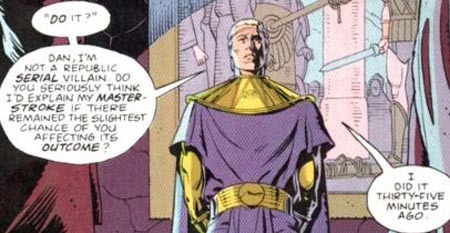
"Endorse a presidential candidate without considering the views of my membership?
I did it thirty-five minutes ago." 


Wednesday, September 23, 2015

"Race and Class Collide in a Plan for Two Brooklyn Schools": From The New York Times

Kate Taylor, reporter for The New York Times, recently published a story rife with insights in the intersectionalities of prejudice, fear, and segregationist idealisms associated with contemporary American values regarding public schools. As someone deep into the messages in Robert Putnam's Our Kids: The American Dream in Crisis, I found the story fascinating.

Here's its crux: When overcrowding as P.S. 8 in Brooklyn, New York, became a concern, city officials suggested moving students from that school to nearby P.S. 307, which has more than enough space to accommodate the overflow. However, when rezoning to enact this plan was pitched, stakeholders took issue. Some simply do not want the levels of racial and socioeconomic intermingling the move would facilitate in one of America's most segregated school systems.

Read the article by clicking *here*.  Marvel that some of the people quoted live in the North in 2015 and not Greensboro, North Carolina, in 1965. Note how test scores are a focus regarding defining quality schools and "quality" students.

Putnam says in Our Kids that growing housing and community segregation between the well-off and the poor presents challenges to empathy, since so few rich kids actually see kids not as well off as they do. In this story, there is a concerted effort to keep well-off children away from poorer children, to keep black and brown kids away from Anglos and people of East Asian decent. There's even palpable concern about busing as a means of achieving a racially and economically diverse student body -- with space to move and mingle!

The adults in this situation are perpetuating the mentalities that keep the American populus from addressing growing social mobility gaps and opportunity gaps. Taylor's story exemplifies the "I got mine" attitude and growing sense of insularity and "unknowability of the self from the other" that even some liberal-minded social justice groups' members use to defend exclusionary spaces.

May the members of this community see all the young people at both these schools -- attending now and attending in the near future -- as their kids, every one of them.